
Knowing how to keep kitchen knives sharp is one of the easiest ways to make cooking safer, faster, and more enjoyable. A sharp knife glides through food with little effort, while a dull one slips, crushes, and tears. The good news is that most of the wear on a blade comes from everyday habits, which means small changes can make a big difference. This guide shares practical kitchen knife care tips covering honing, cutting boards, cleaning, and storage, plus advice on when it is time to call in a professional.
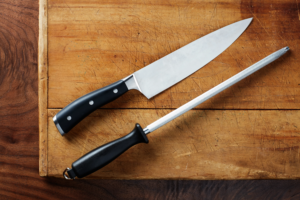
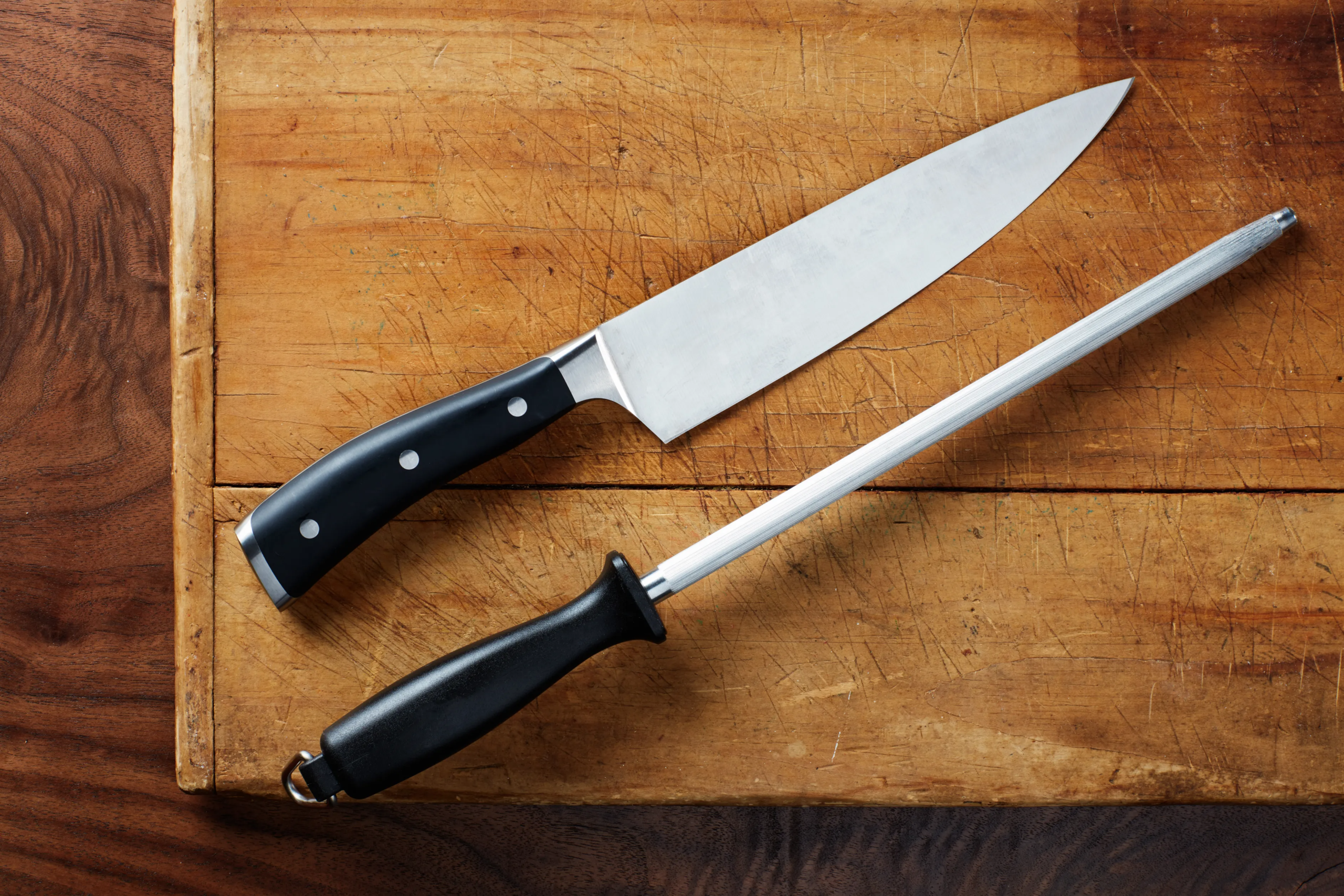
A sharp edge is not only about sharpening. Between sharpenings, the edge of a knife slowly bends out of alignment, and that is what makes it feel dull. A honing steel pushes it back into place without removing much metal, so a few light strokes before each cooking session go a long way. If you want to understand what the tool actually does, this explanation of a honing steel on Wikipedia is a helpful read.
The daily routine for how to keep kitchen knives sharp is simple:
1. Hone the blade lightly before use, holding a steady angle on each side.
2. Wash by hand with warm water and mild soap straight after cutting.
3. Dry the knife immediately to prevent rust and staining.
4. Never put good knives in the dishwasher, where heat and knocks damage the edge.
Your cutting surface matters just as much as your technique. The best cutting board for sharp knives has a little give, so the edge is not battered with every slice. End-grain wood is a favourite because it is gentle on the blade, while good quality plastic or rubber boards are also kind to steel and easy to keep clean. Avoid glass, stone, marble, and ceramic surfaces completely. They may look elegant, but they dull an edge within a few uses and can even chip harder Japanese steel. Whatever you choose, make sure the board is large and stable, since a board that slides around forces awkward cuts.
Tossing knives loosely into a drawer is one of the quickest ways to ruin a good blade, since they knock against metal utensils and each other. Proper knife storage keeps the edge safe and your fingers out of harm’s way. A wall-mounted magnetic strip, a wooden block, or a blade guard or sheath are all good choices. Always place the knife on a magnetic strip spine first rather than dragging the edge across it, and make sure the block slots are clean and dry before inserting a blade. If you travel with knives or keep them in a drawer, a simple edge guard is an inexpensive way to protect both the steel and anyone reaching in. Cheap guards cost very little compared with the price of repairing a chipped edge.
A few small habits can extend kitchen knife edge life dramatically. Use the right knife for the job, and keep your chef’s knife away from bones, frozen food, and hard shells. Slice with a smooth push or pull instead of chopping down hard, and use the spine of the blade, not the edge, to scrape ingredients off the board. These habits are the real secret behind how to keep kitchen knives sharp between professional sharpenings, because they stop damage before it starts. It also helps to avoid leaving knives soaking in the sink, where moisture and stray pans can cause rust and chips. Treat each blade as a precision tool rather than a general-purpose prybar or can opener, and it will reward you with a cleaner, longer-lasting edge.
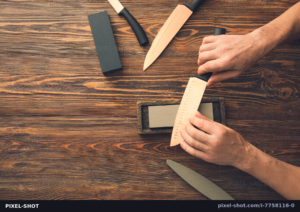
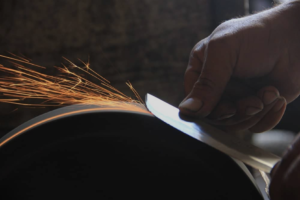
Even when you know how to keep kitchen knives sharp at home, honing keeps an edge aligned but cannot restore one that has genuinely worn away. If your knife struggles with tomatoes or tears paper rather than slicing it, it needs sharpening. Many people also wonder how often this is needed, and for most home cooks the answer is once or twice a year, depending on use. Because overly aggressive machines can remove far too much steel, hand-sharpening on whetstones is the safest route. At Knife Tech, we hand-sharpen everything from everyday chef’s knives to Japanese blades. Browse our services page to see what we cover, pick up quality stones and accessories from our shop, or learn more about our approach on the Story page.
Learning how to keep kitchen knives sharp comes down to a handful of habits: hone regularly, cut on a suitable board, store blades safely, and avoid abusing the edge. Put these kitchen knife care tips into practice and your knives will stay safer, more precise, and more enjoyable to use for years to come. When the edge finally needs a full reset, a proper hand sharpening will bring it right back.