
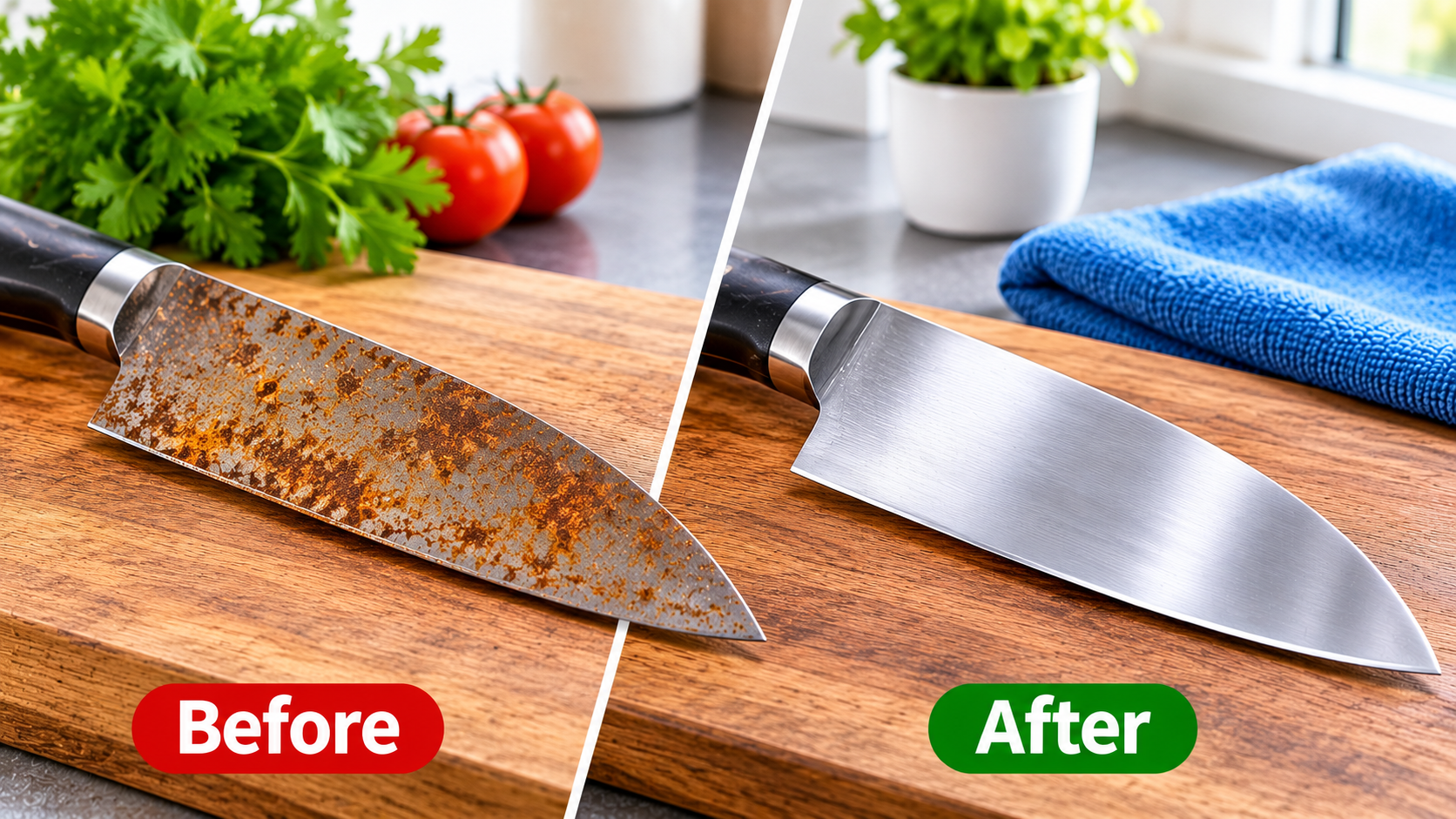
Few things are more disappointing than pulling a knife from the drawer and finding orange spots along the blade. The good news is that kitchen knife rust removal is usually straightforward, especially when you catch the problem early. Rust forms when iron in the steel reacts with moisture and oxygen, and it can appear even on knives sold as stainless. This guide explains why rust develops, how to remove it safely using simple household items, and which habits keep it from coming back.
Carbon steel knives rust quickly if left wet, but stainless steel is not rust-proof either. It simply resists corrosion better because of its chromium content. Water left on the blade, acidic foods such as lemon and tomato, salt, and dishwasher detergent can all break down that protective layer. Left alone, surface rust can deepen into pitting, which weakens the edge and makes the blade harder to sharpen. Prompt kitchen knife rust removal protects the steel, keeps your food clean, and saves you from replacing a knife that could have been rescued.
If you need to remove rust from stainless steel knives, start with the gentlest method and only escalate if needed. Work on a stable surface, keep the edge pointed away from you, and wear gloves if you have a lot to clean. Here are four reliable steps:
For stubborn spots, a short soak in white vinegar, around five minutes at most, can loosen the rust, though longer soaks can mark the steel. Some people use a rust-eraser block or a fine abrasive sponge, which also works well on stainless blades. Avoid steel wool or harsh scouring powders, since they leave scratches that trap moisture and invite rust to return.
Cleaning rust away is only half the job. To prevent rust on kitchen knives, build a few simple habits into your routine. Wash each knife by hand soon after use and dry it completely with a clean towel, paying attention to the area where the blade meets the handle. Never leave knives soaking in the sink, and never put good knives in the dishwasher, where heat, steam and strong detergent speed up corrosion. For carbon steel blades, wipe the steel dry after every cut of acidic food, because lemon, onion and tomato react with it quickly.
Where you keep your knives matters as much as how you wash them. Some of the best knife rust prevention tips involve storage. Use a wooden block with dry slots, a wall-mounted magnetic strip, or a blade guard, and make sure the knife is fully dry before it goes away. Avoid cramped drawers and damp cabinets near the dishwasher or sink, where humidity is high. If you own carbon steel knives, a very thin wipe of food-safe mineral oil, applied occasionally, creates a protective barrier against moisture. To understand why steel corrodes in the first place, this overview of rust on Wikipedia explains the chemistry in plain terms.
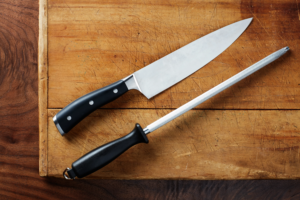
Proper kitchen knife maintenance combines cleaning, drying, storage and regular sharpening. Hone your knife before use to keep the edge aligned, choose a wood or plastic cutting board rather than glass or stone, and book a professional sharpening once or twice a year. A sharp, well-kept knife is easier to clean too, because it cuts food cleanly and leaves fewer residues behind. Good habits are the most effective form of kitchen knife rust removal, because they stop rust from forming in the first place.
Light surface rust usually comes off with the methods above, but deep pitting, rust near the edge or a badly neglected antique blade needs expert attention. For these cases, professional kitchen knife rust removal is the safest route, because a trained sharpener can remove damaged metal and restore the bevel without ruining the knife. At Knife Tech, we hand-sharpen and restore kitchen knives, including rusty or chipped blades. See what we offer on our services page, browse care products and stones in our shop, or learn more about us on the Story page.
Effective kitchen knife rust removal comes down to acting early, using gentle methods and keeping your blades dry. Clean spots with baking soda or a short vinegar soak, follow simple prevention habits, and store your knives properly, and rust will rarely become a problem again. When the damage goes deeper than the surface, a skilled sharpener can bring a rusty knife back to life.