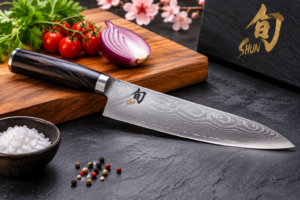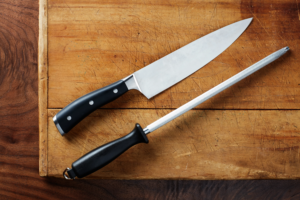

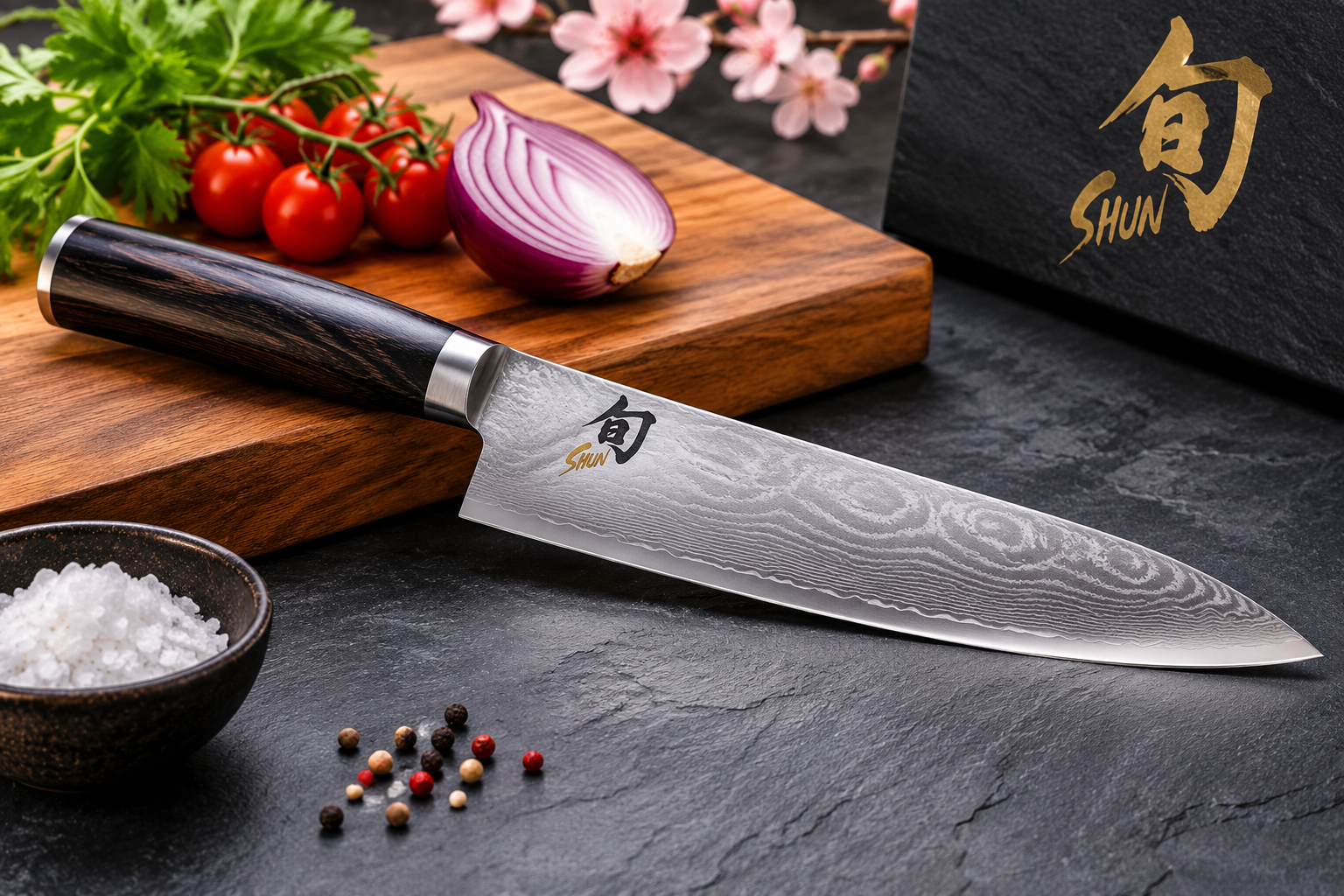
If you have ever sharpened a Japanese knife and felt it came out duller or more fragile than before, the culprit was probably the angle. The Japanese knife sharpening angle is one of the most important choices you make, because it controls how keen the edge is and how well it survives daily use. Japanese blades are thinner and harder than most Western knives, so they reward precision and punish guesswork. This guide explains the typical angles, how edge geometry works, and how to keep a consistent angle on the stone.
A Japanese Knife Sharpening Angle is simply two surfaces meeting at a point, and the angle between them determines everything about how it behaves. A smaller angle produces a thinner, sharper edge that glides through food with almost no resistance, but it is also more delicate and can chip if misused. A larger angle is sturdier and holds up better to hard ingredients, though it feels less crisp. Because Japanese steel is hard and often brittle compared with softer Western steel, getting the right balance is essential. Western knives usually sit around 20 to 22 degrees per side, whereas Japanese blades are commonly sharpened to a much finer angle.
The ideal Japanese knife blade angle depends on the knife and what you cook with it. Most double bevel Japanese knives, such as a gyuto, santoku or nakiri, are sharpened to roughly 12 to 17 degrees per side. Many sharpeners settle on 15 degrees as a reliable middle ground. A petty or paring knife may go a touch finer for delicate work, while a deba, which cuts through fish bones, needs a sturdier angle to avoid chipping. Always check the manufacturer’s guidance, since some premium blades are made with a specific geometry in mind. In practice, the best Japanese knife sharpening angle is the one that suits both the steel and the way you use the knife.
The 15 degree Japanese Knife Sharpening Angle is popular for good reason. It is sharp enough to deliver the effortless slicing people expect from Japanese cutlery, yet strong enough to stay sharp through normal home or restaurant use. Fifteen degrees per side gives a total included angle of about 30 degrees. To find it on the stone, raise the spine so it sits at roughly a quarter of the blade’s height above the surface, which is a handy visual check for 15 degrees. An inexpensive angle guide can help while you build muscle memory.
Angle is only part of the story. Japanese knife edge geometry also includes the thickness behind the edge, the shape of the bevel and the profile of the blade. A thin knife with a shallow grind cuts beautifully even at a modest angle, while a thicker blade can feel wedgy no matter how sharp the edge is. This is why sharpening needs to respect the blade’s original design instead of forcing a new shape onto it, and it is why the right Japanese knife sharpening angle can differ from one blade to the next. For a broader look at how blades are described, see this overview of knife blade terminology on Wikipedia.
Understanding double bevel vs single bevel knives is key to choosing your angle. Double bevel knives are ground on both sides of the edge and are sharpened symmetrically, so you simply hold the same angle on each face. Single bevel knives, such as a yanagiba or usuba, are ground on one side only and have a flat or slightly hollow back. These are sharpened mainly on the beveled side, often at a finer angle, with just a light pass on the flat back to remove the burr. Because the technique differs, treat each type separately, and never sharpen a single bevel blade as if it were symmetrical.
Here are a few tips to hold a steady angle:
Holding the right Japanese knife sharpening angle by hand takes plenty of practice, and mistakes on hard steel can cost you an expensive blade. If you would rather not risk it, Knife Tech hand-sharpens Japanese knives to suit each blade’s geometry. Browse our services page, pick up stones and angle guides from our shop, or learn more about our approach on the Story page.
Choosing the correct Japanese knife sharpening angle protects both the performance and the lifespan of your blade. Match the angle to the knife type, respect its geometry, and keep your technique steady, whether you work on double bevel or single bevel knives. With a little practice, or the help of a skilled sharpener, you will enjoy an edge that cuts cleanly for a long time.